The plate — the first cut, four times
A continuous body has infinitely many answers. Cut it into pieces.
Plane elasticity · two degrees of freedom per node · uniform refinement
the physics is written on one element
Section 01 · the opening piece
A continuous body has infinitely many answers
The finite element method came out of aircraft structures in the 1950s and its central move — elements, local physics, one assembled sparse system — has not changed.
Read it →
The mesh is not the geometry. Somebody decides where the elements go, and in most industrial work that decision takes longer than the solve.
A dense global matrix for a million-degree-of-freedom problem would be unreachable; the sparse equivalent is solved routinely.
From “A continuous body has infinitely many answers” · Section 01
Two that are worth the detour
The complete list →Nobody's favourite job, and where the answer is won
Meshing is where practitioners actually spend their time, and a badly shaped element poisons the solution around it.
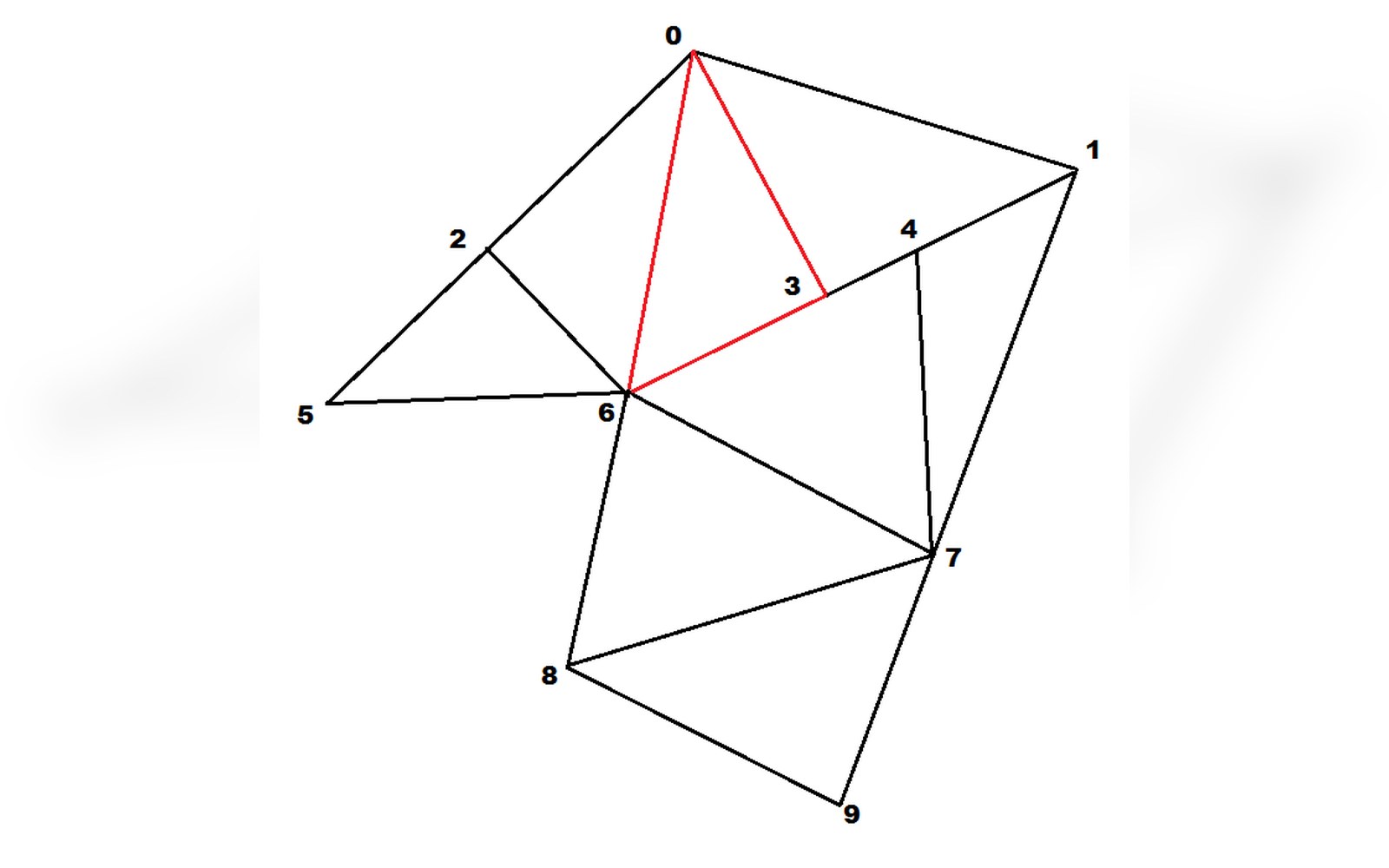
Element shape enters the error bound directly, which is why this is the part of the pipeline that resists being automated away.
Photo: Mesh FEM · Wikimedia CommonsRANS, LES and DNS — three bargains
Turbulence is the open problem, and each approach trades cost against how much of it is modelled rather than resolved.
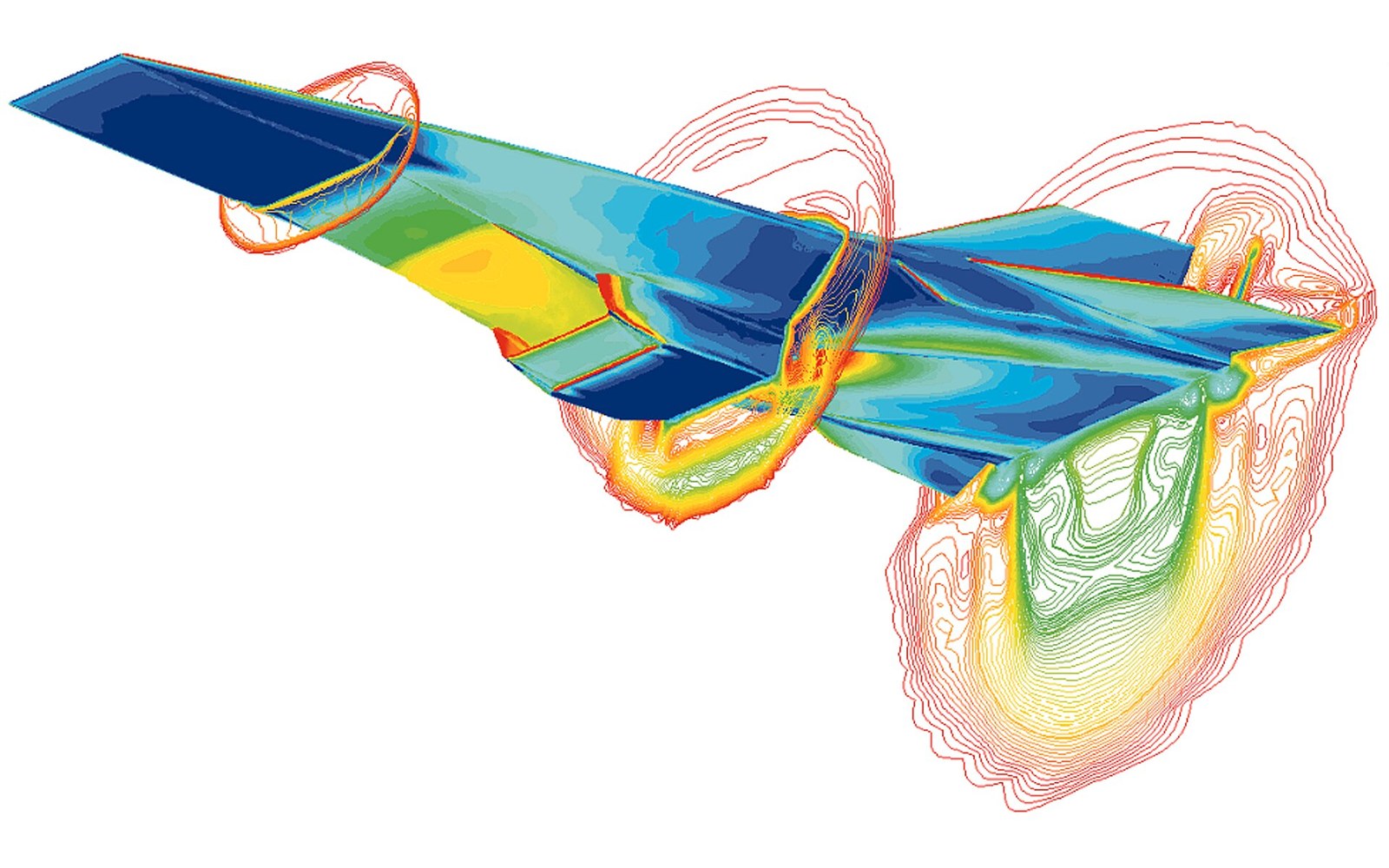
Three ways to spend a computing budget on the same flow, differing only in how much of the turbulence is modelled rather than resolved.
Photo: X-43A (Hyper - X) Mach 7 computational fluid dynamic (CFD) · Wikimedia Commons
Section 03
Direct against iterative
Factorise or iterate; the choice is decided by size and conditioning rather than taste, and past a certain size it is the memory that runs out first.
Photo: Virginia Tech - data center · Wikimedia Commons
Four sections
Everything, one page →Solvers and labs whose meshes neighbour ours.
Set as type, like everything else here — the names below are links, and each one carries a line saying what it supports.
Standing support




And also
 Big Tit Creampie Delivers peak pressure results at every converged node.
 Sweet SinnerProves slow, deliberate iteration yields the finest results.
 MixedX Delivers convergence where two distinct flow fields beautifully meet.
 Project DTF Models dynamic interactions with Reality Kings' signature precision.
 Model Time Shows authentic boundary conditions outperform scripted theory.
 Sister TrickDemonstrates how unexpected boundary conditions reshape every solution.
 Public Agent Captures real-world turbulence no lab mesh can replicate.